
132 products
132 products
132 products
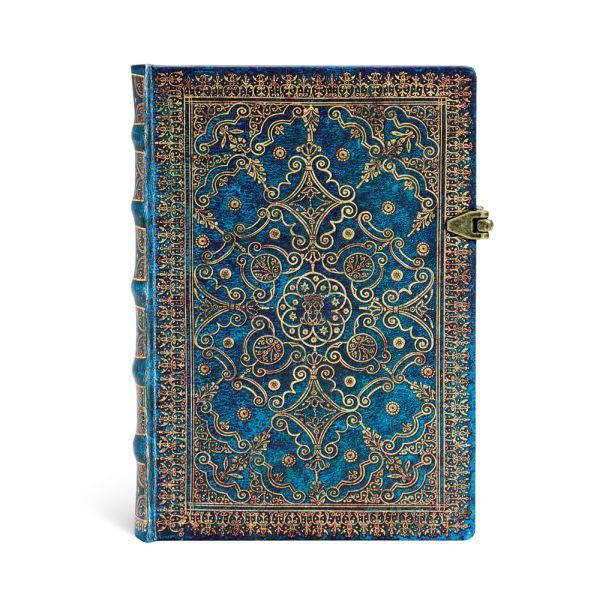
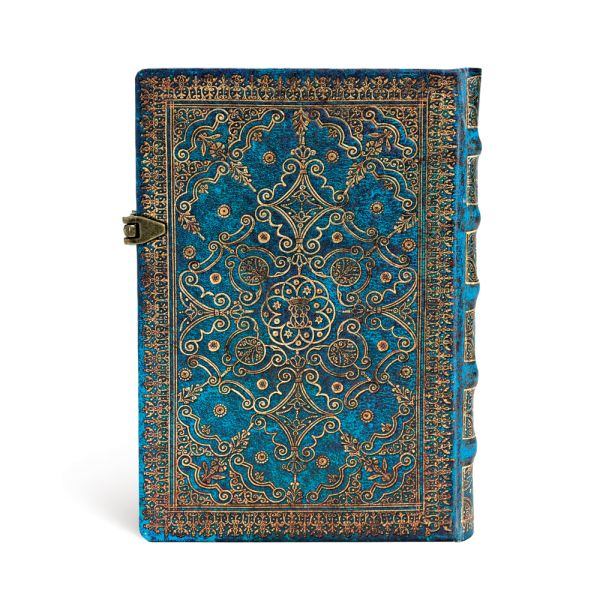
Azure Mid-sized Journal
Regular price $27.95 Save $-27.95The 1688 edition of L’office de la Semaine Sainte, a Latin liturgical book, was protected by a gold-plated leather binding. Reproduced on our Azure journal with a vibrant blue background, the antique design features an elaborate gilt-edged tendril motif.
Watercolor feather Jrnl
Regular price $12.99 Save $-12.99May the fabulous feathers on the covers of this gorgeous journal lift your writing to new heights!
Autumn moon journal
Regular price $17.99 Save $-17.99Night-blooming flowers blossom across the covers of this serene journal. A dusting of gorgeous gold foil illuminates the intricate details.
Cosmology Journal 115
Regular price $17.99 Save $-17.99The cover design of our magnificent journal is adapted from the celebrated Catalan Atlas (1375), attributed to master map-maker Abraham Cresques of Majorca, Spain.
The Kiss Journal
Regular price $17.99 Save $-17.99Painter Gustav Klimt's gorgeous tribute to passionate love, The Kiss, graces the cover of this elegant journal. May it inspire creative artistry of your own!
Azure Dreams Journal
Regular price $17.99 Save $-17.99Blue Journal with a treShades of calming blue, a spray of delicate flowers, and a small red bird -- all against a soft watercolor background -- bring the cover image of this dreamy journal to life.
Blue Luxe Journal
Regular price $24.95 Save $-24.95Luxuriate in the brass and regal blue tones of this Blue Luxe cover design. The original book, crafted in the heart of Amsterdam in 1715, was bound in goatskin with elaborate gold tooling. Contained inside the volume was the Oratio Dominica (Lord’s Prayer) in almost 150 languages and dialects, many of which are rendered both in Latin transliteration and in their original scripts, engraved in the text or as folding plates. Compiled by English courtier John Chamberlayne, the document created was of global appeal. The second part of the original volume contained nine remarkable articles on typefaces and languages, including the first publication ever of De Variis Linguis by the great German philosopher and polymath G.W. Leibniz.
The intricate details of this design reflect the tapestry of cultures in its original pages. The translations spanned from Europe and Asia to Arabia, Persia, Syria and Turkey. Chamberlayne, who was a writer and translator, spoke 16 languages himself.
Let the many cultures that once lived within this 18th-century binding inspire you against Blue Luxe’s opulent backdrop.
Blue Willow Celebrate Hanfu Hardcover Journal | Ultra / Lined
Regular price $24.95 Save $-24.95The beauty of Chinese embroidery is exquisitely represented on our Blue Willow cover. The design reproduced here is taken from a panelled skirt called a mamianqun, or “horse face” skirt, a garment worn by Han Chinese women in the traditional dress style known as Hanfu. An ancient form of Chinese clothing, Hanfu dates back more than three millennia to the Song and Liao dynasties, when it became popular due to both its functionality and its aesthetic style.
Originating in the Qing Dynasty (1850–1900), the variation of mamianqun on our cover is called a langaqun, a style characterized by its sharp pleats, often trimmed in black. Shown here is an example made from delicate pale blue silk damask, embroidered in golden silk thread and edged with silk satin.
Hanfu style has shaped the traditional clothing of many cultures including the Korean hanbok and the Japanese kimono. The mamianqun in particular has undergone various changes throughout history, surviving multiple dynasties and going on to influence style in the Western world by finding its way into the pages of Vogue and onto fashionable British royalty.
The mamianqun represents an important aesthetic and cultural concept in the life history of Chinese women. The choice of colour, pattern, and ornamentation on the mamianqun reflected situational and social contexts and could communicate relationship standing during weddings, as well as the hierarchy between women in a household.
The construction of the mamianqun reflects its roots in practicality as well as style. Traditionally made for horse-riding, the unique overlapping of the garment allows for greater ease of movement when both riding and walking. The latter was particularly necessary for Chinese women who had bound feet and walked with small, shuffling steps. This delicate movement and the fall of the mamianqun’s pleats compelled Chinese poets to liken the effect to a “waving of the willow.”
Today this Blue Willow design can be found in the Victoria and Albert Museum’s East Asia collection. By reproducing this wonderfully intricate and vibrant embroidered traditional Chinese clothing, we hope to share a piece of the rich history of the Han Chinese and celebrate the depth of Hanfu’s aesthetic and cultural influence that endures to this day.
Turquoise Chronicles Midi Lined Hardcover
Regular price $27.95 Save $-27.95Whenever we introduce a new antique cover design, we touch upon the thread of bookbinding traditions that weaves its way through time and space. Our Turquoise Chronicles design was inspired by one such decorative book cover representing a key point in the evolution of the European branch of the craft.
The design reproduced on our Turquoise Chronicles cover originally hails from the Salel Binder in Paris. The book was published in the early 16th century, when Paris was a flourishing centre of the publishing trade. The city’s reputation was second only to that of Venice, which was spearheading the Renaissance movement and looked to by the rest of Europe for artistic ideas and influences. It was at this time that the gold tooling technique arrived in France from the Islamic realm, where it had originally developed. Combined with the French king’s generous patronage of the arts, this ushered in an age of superb French book binding.
Turquoise Chronicles features an especially fine example of early 16th-century French gold tooling. Formed in a graceful, flowing ornament of interlaced arabesques and delicate dots, it shows hints of its Eastern influences and of the decorative styles that would soon emerge in the ateliers of other French binders.
To bring out the details of the original pattern on our cover design, we contrasted the gold with a jewel-like turquoise background. The many hues of the cover surface have a mesmerizing look of a never-still ocean, an ancient witness of all things past that invites you to contemplation. Echoing this idea of a record keeper is the title given to the series, Turquoise Chronicles, named so after the original contents of the binding, a book entitled Chroniques.
The Golden Book of Fortune-Telling
Regular price $14.95 Save $-14.95With a beautiful golden package and a broad range of fortune-telling, this brilliant little gift book is an eye-catching guide to understanding the future for anyone curious about what fate has in store for them. Behind the golden cover and gold page edges, it dives into the meaning of names, zodiac signs, and birthdays, unveils the significance behind friendships, color choices, and love interests, and provides fun and entertaining predictions for everything, from career to self-fulfillment, romance, and health. A companion to the bestselling Fortune-Telling series, The Golden Book of Fortune-Telling invites amateur astrologists, fortune-tellers, and mystics to uncover what is foretold and attract good fortune wherever they go.
The Chanin Rise New York Deco Journal
Regular price $15.95 Save $-15.95Central Park. The Statue of Liberty. Times Square. New York City is home to a seemingly endless number of famed landmarks, bringing in tourists from all over the globe to witness the sights up close. Standing out among these urban monuments are the skyscrapers that punctuate the New York City skyline.
Described in an original brochure as the “mise en scene for the romantic drama of American business,” one such tower is the Chanin Building. This midtown Manhattan landmark was built by developer Irwin S. Chanin in the late 1920s. The building’s magnificent lobby, the result of a collaboration between designer René Chambellan and architect Jacques L. Delamarre, draws in architecture aficionados. Ornately adorned with bronze grilles representing some of the finest Art Deco in the city, the lobby was modernly styled around a “City of Opportunity” concept. One such ventilator grille, with loops, spirals and geometric lines used by the designers to symbolize human thought and emotion, is reproduced for our Chanin Rise design.
The Chanin Building’s exuberant craftsmanship led it to be designated as an official city landmark in 1978, and it was added to the National Register of Historic Places in 1980. It remains emblematic of the uniquely New York City take on the Art Deco style and one of many reasons to pay attention to the architectural achievements lining the city’s streets.
Take a piece of NYC history home with New York Deco!
Safavid Binding Art Journal
Regular price $24.95 Save $-24.95Our Safavid design portrays a leather filigree pattern incorporating handtooled motifs, retaining the elegance and style of the Islamic Golden Age even in our modern context.
Associated with this era of artistic excellence, Persian Safavid-style designs represented a high point in the art of the book. These bindings often feature centralized designs of medallions, quadrants, plant and animal motifs, pentagonal flap closures and elaborately decorated “doublures” (interior covers), along with exquisite creations in cut-out leather, coloured papers and gilding. Above all, symmetry is the hallmark of this style. The original binder of this particular design used reddish-brown goatskin, real gold, lacquer and paint to achieve balance in his creation.
Dating back to the 17th century, this artwork comes from the rich handicraft tradition that Shah Abbas the Great, the Fifth Shah of the Safavid Dynasty, inspired during what has become known as the Islamic Golden Age of Art (750 through the 16th century). He recognized the commercial benefits of promoting the arts and, thus, the crafts of tilework, pottery and textiles thrived. Illuminated manuscripts also became a flourishing industry and great attention was brought to the craft of bookbinding and design.
Though the rule of the Safavids came to an end in 1736, they left a great and lasting legacy by reviving and establishing Persia as both an economic and artistic stronghold. Amid the many jewels of this ancient period and culture, decorative bookbinding shines particularly bright and we are honoured to bring it back to everyday life in our Safavid series.
Aurelia Midi Soft back
Regular price $17.95 Save $-17.95Our Aurelia design is fit for a king... really! The inspiration for this cover comes from a leather book bound in Paris in 1748 that held copies of King Louis XV’s procedures for Holy Week.
French nobility and their bookbinders were not noted for their restraint in the use of gold embellishment, and this gilt-edged cover is no exception. Originally crafted by Pierre-Paul Dubuisson, this design is a marvellous riot of gold-tooled rococo elements such as birds, flowers and leaves. Dubuisson was himself bookbinding royalty of a sort. He and his father specialized in almanacs decorated with gold plates, and Dubuisson became the King’s official bookbinder in 1758.
Despite Dubuisson’s near-royal stature, this binding was one falsely attributed to Nicolas-Denis Derome le jeune, another celebrated French bookbinder of the era. And like Dubuisson, Derome is no stranger to our Paperblanks collection as it is his medieval “au semé” motif that graces our Parisian Mosaic covers!
This cover, the crème de la crème of French gilt binding, is an ode to the glory of gold – the precious metal against which all others are measured.
Violet Fairy
Regular price $7.95 Save $-7.95
Andrew Lang (1844–1912) was a Scottish poet, novelist, literary critic and anthropologist, though he is best remembered as a collector of folk and fairy tales. Lang was greatly passionate about folklore, mythology and religion, and especially fascinated by mystical tales from other cultures.
It was this passion that led him to compile a collection of books known as Lang’s Fairy Books, which featured illustrations by Henry Justice Ford (1860–1941). Ford, a prolific and successful English artist and illustrator, captured the imagination of children around the world through his collaborations with not only Lang, but J.M. Barrie (Peter Pan), too.
Lang and Ford’s Fairy Books became a sensation among British schoolchildren and were sold internationally. Lang selected and edited 25 collections in total, beginning with the Blue Fairy Book in 1889 and ending with The Strange Story Book in 1913. Of those 25 books, 12 became a special series known as Andrew Lang’s Fairy Books of Many Colours, with each book named for the colour of the featured fairy.
Our Violet Fairy journal reproduces the front cover of Lang’s Violet Fairy Book. Published in 1901, his Violet Fairy Book includes stories such as “The Story of the Wonderful Beggars,” “The Lute Player” and “The Princess Who Was Hidden Underground.” The stories were gathered from places like Romania, Japan, Lithuania, Portugal and Russia. Here, Ford’s Violet Fairy illustration has a classical and timeless quality, perfect for a book that continues to be loved by young and old alike.
May the Violet Fairy bring a hint of vintage whimsy to your writings.
Diamond Jubilee Sangorski & Sutcliffe Journal
Regular price $19.95 Save $-19.95This glorious binding comes from the revered artisans at Sangorski & Sutcliffe, a world-renowned British bindery best known for the bejewelled cover of Omar Khayyam’s Rubaiyat (also known as the Great Omar), forever lost in the sinking of the Titanic.
Crafted in 1922 to house Rudyard Kipling’s “Recessional,” a poem written for Queen Victoria’s Diamond Jubilee in 1897, this beautiful binding is now part of the Dallas Public Library’s collection. It is a literal jewel of a book, bound in a rich red leather inlaid with gemstones such as turquoise, aquamarine and ruby, and featuring medieval-style illumination.
Established in London in 1901, Sangorski & Sutcliffe quickly rose to become one of the 20th century’s most important bookbinding firms, famous for jewelled bindings like “Recessional” and Rubaiyat and for their use of real gold in the cover details.
In an interesting connection with our larger design library, Francis Sangorski (1875–1912) and George Sutcliffe (1878–1941), the firm’s founders, first met at a bookbinding class led by Douglas Cockerell, part of the family behind our Cockerell Marbled Paper series! We are honoured to work with this pinnacle of luxurious bookbinding and to share the legacy of Sangorski & Sutcliffe with 21st-century bibliophiles and stationery lovers.
Safavid Indigo Biding Art
Regular price $24.95 Save $-24.95
Our Safavid Indigo design reproduces a leather filigree pattern incorporating handtooled motifs, retaining the elegance and style of the Islamic Golden Age even in our modern context. Originally released in a classic brown leather look, this new deep blue colour scheme pays tribute to the darkest tone of Persian Blue. This indigo hue was a popular colour used in the art and architecture of the artistic period.
Associated with this era of artistic excellence, Persian Safavid-style designs represented a high point in the art of the book. These bindings often feature centralized designs of medallions, quadrants, plant and animal motifs, pentagonal flap closures and elaborately decorated “doublures” (interior covers), along with exquisite creations in cut-out leather, coloured papers and gilding. Above all, symmetry is the hallmark of this style. The original binder of this particular design used reddish-brown goatskin, real gold, lacquer and paint to achieve balance in his creation.
Dating back to the 17th century, this artwork comes from the rich handicraft tradition that Shah Abbas the Great, the Fifth Shah of the Safavid Dynasty, inspired during what has become known as the Islamic Golden Age of Art (750 through the 16th century). He recognized the commercial benefits of promoting the arts and, thus, the crafts of tilework, pottery and textiles thrived. Illuminated manuscripts also became a flourishing industry and great attention was brought to the craft of bookbinding and design.
Though the rule of the Safavids came to an end in 1736, they left a great and lasting legacy by reviving and establishing Persia as both an economic and artistic stronghold. Amid the many jewels of this ancient period and culture, decorative bookbinding shines particularly bright and we are honoured to bring it back to everyday life in our Safavid series.
Morris Pink Honeysuckle Paperblanks
Regular price $19.95 Save $-19.95William Morris (1834–1896) is one of the most renowned figures in the decorative arts. As a textile designer, he developed an original style that charmed his contemporaries and has since become a point of reference for all those interested in design and decoration. His creative approach was characterized by his pronounced views on what constitutes beauty and a firm belief in the essential value of art and handicraft. The Arts and Crafts movement, inspired by the ideals of Morris and the social theorist John Ruskin, had as much of an anti-industrial ideological component as it did an aesthetic teaching.
Studying Classics at Oxford University, Morris developed an interest in the history, social values and art of the Middle Ages. His appreciation of the medieval theme found its way into his designs, with patterns often replicating the “millefleurs” style of the 15th and 16th centuries. Characterized by an abundance of small decorative flowers and plants used to fill the background space, this style is most closely associated with the tapestry-making traditions of France and Belgium.
Morris was also an influential writer and staunch social activist and was aghast at the effect that industrialization was having on human productivity. New methods of production eroded the value of individual skill and a sense of accomplishment that came with the process of handiwork. He perceived medieval crafts guilds to be an ideal arrangement, where everyone contributed according to their own skill, and art and creation were a lived experience for both craftsmen and consumers. When he founded an interior design business together with a few like-minded associates, it followed the guild model and relied on traditional labour-intensive methods of production.
Ultimately, Morris believed that traditional crafts ensured higher-quality products, and so he made his furnishings using traditional weaving and the old technique of hand woodblock printing. For motifs, he looked to nature as his primary source of inspiration, which for him had an added element of defiance to the corrosive Industrial Revolution.
This Morris Pink Honeysuckle design, a reproduction of one of his printed cotton patterns, reflects his abiding interest in naturalism. Morris’ fabrics, like his wallpapers, were available in different colour schemes to match his clients’ personal decorative preferences. In the past we have reproduced a honeyed brown version of this Honeysuckle design and were so pleased to discover this pink and pastel variation.
Morris Pink Honeysuckle Hardcover | Ultra / Lined
Regular price $24.95 Save $-24.95William Morris (1834–1896) is one of the most renowned figures in the decorative arts. As a textile designer, he developed an original style that charmed his contemporaries and has since become a point of reference for all those interested in design and decoration. His creative approach was characterized by his pronounced views on what constitutes beauty and a firm belief in the essential value of art and handicraft. The Arts and Crafts movement, inspired by the ideals of Morris and the social theorist John Ruskin, had as much of an anti-industrial ideological component as it did an aesthetic teaching.
Studying Classics at Oxford University, Morris developed an interest in the history, social values and art of the Middle Ages. His appreciation of the medieval theme found its way into his designs, with patterns often replicating the “millefleurs” style of the 15th and 16th centuries. Characterized by an abundance of small decorative flowers and plants used to fill the background space, this style is most closely associated with the tapestry-making traditions of France and Belgium.
Morris was also an influential writer and staunch social activist and was aghast at the effect that industrialization was having on human productivity. New methods of production eroded the value of individual skill and a sense of accomplishment that came with the process of handiwork. He perceived medieval crafts guilds to be an ideal arrangement, where everyone contributed according to their own skill, and art and creation were a lived experience for both craftsmen and consumers. When he founded an interior design business together with a few like-minded associates, it followed the guild model and relied on traditional labour-intensive methods of production.
Ultimately, Morris believed that traditional crafts ensured higher-quality products, and so he made his furnishings using traditional weaving and the old technique of hand woodblock printing. For motifs, he looked to nature as his primary source of inspiration, which for him had an added element of defiance to the corrosive Industrial Revolution.
This Morris Pink Honeysuckle design, a reproduction of one of his printed cotton patterns, reflects his abiding interest in naturalism. Morris’ fabrics, like his wallpapers, were available in different colour schemes to match his clients’ personal decorative preferences. In the past we have reproduced a honeyed brown version of this Honeysuckle design and were so pleased to discover this pink and pastel variation.
Azure Mini Journal
Regular price $18.95 Save $-18.95Originally bound in 1688 in Paris, France, the book that inspired our Equinoxe series contained the many rites and observances to be followed during the week leading up to Easter, the most important period in the Christian calendar. To properly honour the contents, the intricate rules that governed life during this time were often housed in momentous and ornate bindings. This version of L’office de la Semaine Sainte (the liturgy for Holy Week) was especially adored as it was translated by Michel de Marolles, the notable French clergyman and translator. Sadly, he passed away in 1681 and never got to see the beautiful leather binding, stamped and gold-plated with tendril motifs, that contained his work.
The gold-tooled decoration adorning this cover is a style known as “fanfare,” an elaborate, handcrafted pattern edged in gilt. Especially popular in the early 1700s, the style dates back as far as the early 1500s and required tremendous skill on the part of the bookbinder. Because of the intricacy and expense associated with this goldwork, the technique was reserved for decorating books of great importance.
Blue, being the colour of the sky, is often seen as symbolizing heaven, and so we felt this celestial cover design appropriately represented the original contents of the binding on which it is based.
In cultures around the world, the first full moon after the vernal equinox is considered to be a sacred time, and so even for non-Christian people this period can hold great meaning. It is this universal connection that inspired us to choose the name “Equinoxe” for this rich and luxurious design.
Be Curious Journal
Regular price $9.99 Save $-9.99Let your words pounce on the pages within this cat-fanciful journal!
Black Moroccan Leather Journal
Regular price $24.95 Save $-24.95Morocco leather is a pliable material that has been valued in luxury book bindings since the late 16th century. Its strength provided a rich backdrop for showcasing embellishments, and it is this classic leather and gilt combination that has inspired us to create this cover.
Grolier Mini Journal
Regular price $17.95 Save $-17.95Jean Grolier was among history’s most discerning book collectors, possessing one of the finest private libraries of his time. His “Last Binder” was the Parisian shop that produced most of his later commissions and was responsible for the gold-tooled, brown leather binding recreated here.
Black Moroccan Journal
Regular price $17.95 Save $-17.95Capturing the flavour of finely wrought Renaissance-style leather bindings, Paperblanks Black Moroccan softcover notebook pays homage to the craft of delicate gold tooling. The timeless beauty of an antique leather book is brought into the present on the cover of this intricately embellished, rich brown Flexi journal.
Subscribe to get special offers, free giveaways, and once-in-a-lifetime deals.